
To open a cannabis store in Saskatchewan you need a cannabis retail permit from the Saskatchewan Liquor and Gaming Authority, known as SLGA, and approval from the municipality or First Nation where the store will operate. SLGA describes the province as an open market: it says it is accepting retail store permit applications for all communities and will not limit the number of permits. That makes entry simple on paper and puts the weight on your choice of community. This guide follows what SLGA publishes. It is general information as of November 2026. It is not legal or financial advice. Confirm current requirements with SLGA before you commit money.
Who regulates cannabis retail in Saskatchewan
SLGA regulates the distribution and sale of recreational cannabis in the province. It issues retail permits and wholesale permits, registers licensed producers that want to sell into Saskatchewan, and inspects permit holders. It states that it regulates recreational cannabis only. Medical cannabis is a federal program run by Health Canada.
The rulebook is SLGA's Cannabis Regulatory Policy Manual. It holds the permitting and operating requirements, including the standards for standalone and integrated stores and the facility security appendix. Read it alongside the application form. Health Canada lists Saskatchewan as a province where adults buy from private licensed stores, in person and online, with a legal age of 19.
What an open market means for you
There is no lottery and no application window in Saskatchewan, according to SLGA. You apply when you are ready, for the community you choose. Three consequences follow.
- Nothing protects your trade area. Another applicant can open near you if the municipality allows it. Your defence is the site, the lease and how the store is run.
- Local rules do the rationing. SLGA does not cap permits, but it strongly encourages applicants to check with the municipality or First Nation early about local limitations or restrictions.
- Small communities are a real option. The rules for stores in smaller places are different, as the next section explains.
In an open market the business case matters more than the application. Count the existing stores, look at who they are and how long they have traded, and be honest about what a new store adds. The guide on choosing a store location sets out how to compare sites.
Standalone and integrated stores
SLGA draws a line by community size.
- In communities of 2,500 or more, cannabis retail stores must operate as standalone businesses.
- In communities under 2,500, a store may be standalone or integrated with another business.
An integrated store sells cannabis inside another business, under facility standards set out in the policy manual. For an owner who already runs a business in a small town, that can change the rent and staffing picture completely. Ask SLGA exactly which standards apply to the type of integrated store you have in mind.
Population figures can move a community across the line. SLGA says it uses census data to decide whether a community is under the threshold. According to SLGA, Statistics Canada plans to release updated population figures from the 2026 census on February 10, 2027, and SLGA will then apply them this way:
- Where a community rises to 2,500 or more, existing integrated stores can keep operating as integrated stores, and new permits must meet the standalone requirements.
- Where a community falls below 2,500, permit holders may stay standalone or, with SLGA's prior approval, convert to an integrated store that meets the facility standards.
If your plan depends on an integrated store in a community near the threshold, raise that with SLGA before you sign anything.
Municipal or First Nation approval
SLGA states that the municipality or First Nation must approve the establishment of a retail store in the community before SLGA will issue a permit. Local approval is a condition, not a courtesy.
SLGA does not list what each community requires, because that is set locally. Go to the municipal office or the First Nation's administration and ask:
- Does the community allow cannabis retail stores at all?
- Which zones permit one, and is it a permitted or a discretionary use?
- Are there separation distances from schools, parks, daycares or other cannabis stores, and how are they measured?
- Is there a local limit on the number of stores?
- What business licence or development permit is needed, and how long does a decision usually take?
- What form of written approval will the community provide for SLGA?
Get the answers in writing. Then look at units. A lease signed before this conversation is the most common expensive mistake in an open market.
The permit application
SLGA publishes a Cannabis Retail or Wholesale Permit Application on its website. According to SLGA:
- You complete an application form for each desired location and send it by email. More than one application can go in a single email.
- Once SLGA receives an application, it contacts you to obtain the permit application fee and gives you a unique identifier number for that application.
- Some sections of the form are completed for every application.
- The personal due diligence section is required only for individuals who have not been through SLGA's due diligence process within the past three years, or whose circumstances have changed substantively.
- The corporate section, including financial statements not previously submitted, is required for all corporate applicants and for shareholders above the ownership threshold stated on the form.
In plain terms, SLGA examines the people and the company as well as the store. Have an ownership chart, financial statements and the source of funds ready before you file. We do not repeat the fee here. SLGA will tell you the current amount. Our licence application team prepares the form and the supporting file.
How stores are supplied and what they can sell
Saskatchewan does not route product through a government warehouse in the way some other provinces do. According to SLGA:
- Permitted wholesalers can sell to permitted retailers and to other permitted wholesalers, but not to the public. Wholesale operations must be physically located in Saskatchewan.
- Only licensed producers registered with SLGA may sell into the Saskatchewan market. Registered producers can ship directly to a permitted wholesaler or retailer.
- Permitted retailers may also sell cannabis at wholesale to other permitted retailers in the province.
This gives a Saskatchewan retailer more than one source of supply. Terms, minimum orders, delivery schedules and credit can differ between suppliers, so supplier selection becomes part of running the store. SLGA publishes a list of registered suppliers and wholesale permit holders. Use it to confirm that anyone offering you product is authorised.
On the selling side, SLGA says a permitted retailer must operate a brick-and-mortar store and can also sell online for pick-up and delivery in Saskatchewan. The physical store comes first. Ask SLGA what it requires before you launch online ordering or delivery.
Store security and build-out
SLGA changed its storage rules. According to SLGA, effective January 2025:
- Retail and wholesale permit holders are no longer required to build a separate cannabis secure storage area inside the store or warehouse.
- They are no longer required to move cannabis into a separate secure storage area outside operating hours.
- General security standards remain in effect for alarm systems, digital camera security systems and perimeter security.
- Cannabis must still be secured against unauthorised access. SLGA leaves the method to the permit holder, depending on the type of business.
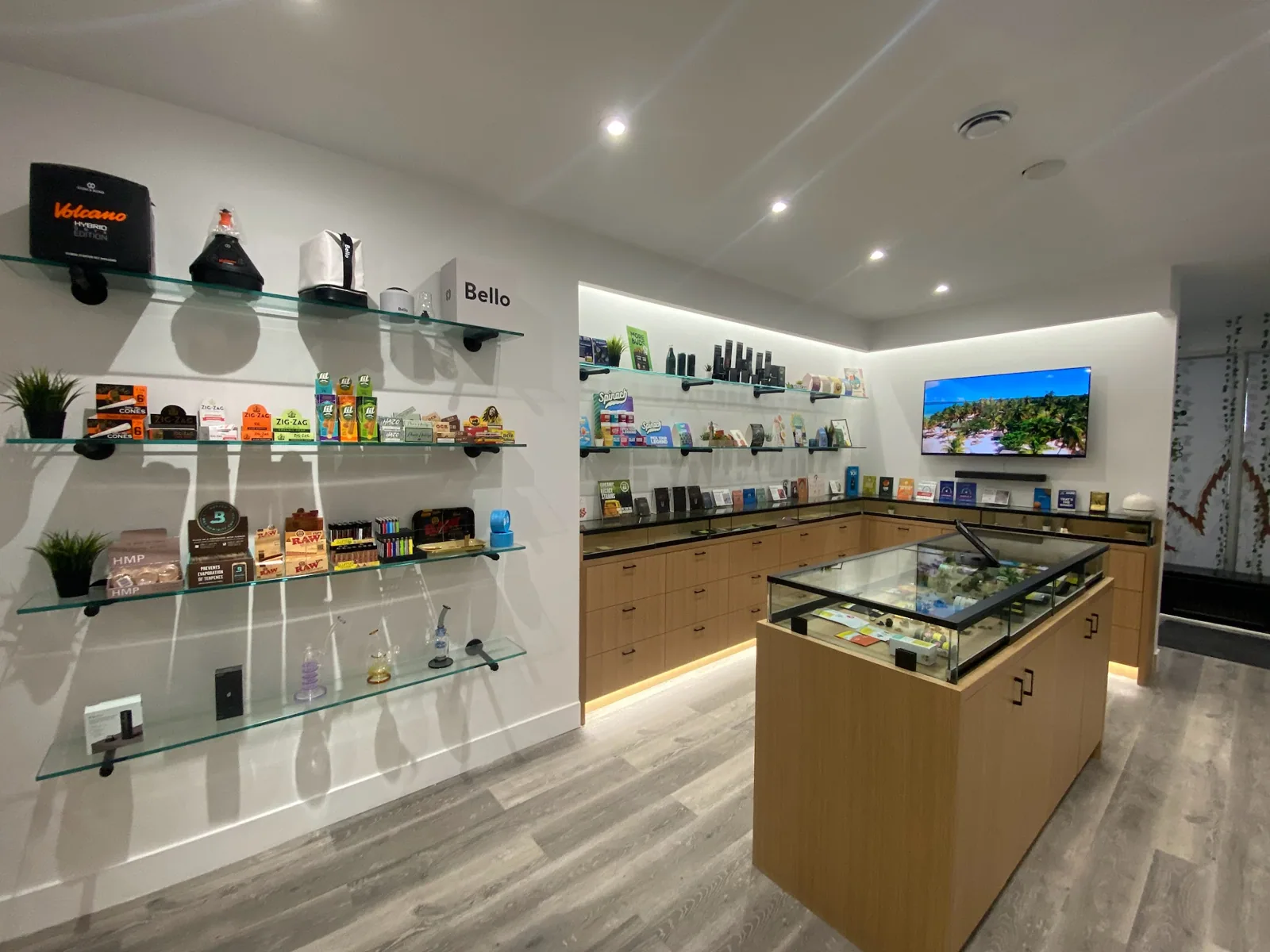
SLGA gives an example. A standalone store might leave products in display cases on the sales floor overnight. An integrated store inside a business that is open around the clock would need all cannabis locked up after authorised cannabis retailing hours. Owners may still build a storage room or vault through the normal floor plan approval process.
SLGA said the policy manual would be updated to reflect these changes. Until you have confirmed the current text, check your plans with SLGA. Our build-out consulting team works from the regulator's standards.
The order of work
- Choose the community. Check its population against the standalone rule and count the stores already there.
- Talk to the municipality or First Nation. Confirm zoning, distances, local limits and the form of approval.
- Set up the company and the ownership file. Decide owners and lenders now.
- Confirm the money. Lease, build-out, opening inventory and working capital.
- Secure the site. Make the lease conditional on local approval and the SLGA permit where the landlord agrees.
- Apply to SLGA. One form per location, by email.
- Build and equip. Alarm, cameras, perimeter security, display and point of sale.
- Line up suppliers. Open accounts with permitted wholesalers or registered producers.
- Train, stock and open. The pages we reviewed do not state the staff training requirement. Confirm it with SLGA.
Permits are renewed. SLGA says the renewal application should be submitted at least 60 days before the permit expires. Put that date in the calendar the day the permit arrives.
Common questions
Is there a limit on cannabis store permits in Saskatchewan?
SLGA says it will not limit the number of permits and is accepting applications for all communities. A municipality or First Nation can still set its own limitations, so check locally before you choose a site.
Can I sell cannabis inside my existing business in Saskatchewan?
Only in a community under 2,500 people, according to SLGA, where a store may be integrated with another business. In communities of 2,500 or more the store must be a standalone business.
Do I need municipal approval for a cannabis store in Saskatchewan?
Yes. SLGA states that the municipality or First Nation must approve the store before it will issue a permit. Contact the local office early about zoning and any restrictions.
Where do Saskatchewan cannabis stores buy product?
From wholesalers that hold an SLGA permit, from licensed producers registered with SLGA, or from other permitted retailers selling at wholesale. SLGA publishes a list of authorised suppliers.
Can a Saskatchewan cannabis store sell online?
SLGA says a permitted retailer must operate a physical store and can also sell online for pick-up and delivery within Saskatchewan. Ask SLGA what it requires before you start.
Where Modern Day Cannabis fits
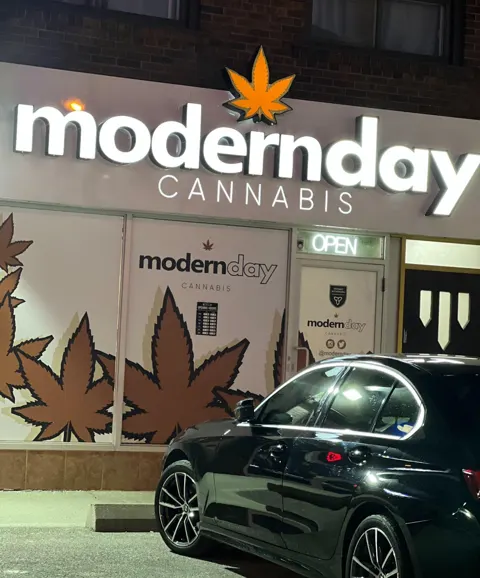
Modern Day Cannabis runs licensed cannabis stores and helps other owners open theirs. In Saskatchewan we can help you compare communities, prepare the SLGA application, plan the store to the security standards and train the opening team, on your own store or under our franchise. We do not promise a permit. That decision is SLGA's.
Send the short form on this page with the community you are looking at. We will tell you what to confirm first. For other provinces, see how to open a cannabis store in Canada.
General information as of November 2026, not legal or financial advice. Cannabis rules differ by state and province and change often.