To open a cannabis store in Canada you apply to the province, not to Ottawa, and whether you can open one at all depends on which province you pick. Some provinces license private stores, some run every store themselves, and a few do both. This guide sorts the provinces and territories into those groups, names who to deal with, and sets out the order of work that holds almost everywhere. It is general information as of November 2026. It is not legal or financial advice. Rules change, so confirm every point with the regulator named before you spend money.
Who controls cannabis retail in Canada
The federal Cannabis Act legalised adult-use cannabis in October 2018. It split the work in two. The federal government, through Health Canada, licenses the companies that grow and process cannabis and sets the rules for packaging, labelling and promotion. The provinces and territories decide how cannabis is sold.
Health Canada puts it plainly. Provinces and territories set the rules on how cannabis can be sold, where stores may be located, how stores must be operated and who is allowed to sell it. They can also add limits of their own, such as a higher minimum age.
For a store owner that means three things.
- There is no national retail licence. Each province is its own market with its own application.
- A store sells only legal product from federally licensed producers. In most provinces it reaches you through a provincial wholesaler.
- What you learned in one province does not carry to the next. Read the regulator's own pages each time.
Provinces that license private cannabis stores
Health Canada keeps a page listing where adults can legally buy cannabis in each province and territory. Its own date stamp shows it was last modified in October 2022, so use it as a starting map and check the province for anything newer. According to that page, these jurisdictions sell through private licensed stores, both in person and online:
- Alberta. Private stores licensed by Alberta Gaming, Liquor and Cannabis (AGLC).
- Saskatchewan. Private stores holding a permit from the Saskatchewan Liquor and Gaming Authority (SLGA).
- Manitoba. Private stores licensed by the Liquor, Gaming and Cannabis Authority of Manitoba (LGCA).
- Yukon and Nunavut. Listed by Health Canada as private licensed stores. Confirm the current process with each territorial government.
These are the places where a private owner is the normal way a store exists. They are also the places where you will face the most other stores, because nothing rations entry in the way a government monopoly does.
Provinces with both private and government stores
Three provinces mix the two models, according to the same Health Canada page.
- British Columbia. Government-operated stores, in person and online, sit alongside private licensed in-person stores. Private stores are licensed by the Liquor and Cannabis Regulation Branch (LCRB).
- Ontario. Private licensed in-person stores, with a government-operated online store. The Alcohol and Gaming Commission of Ontario (AGCO) is the regulator. Our Ontario guide covers the approvals in detail.
- Newfoundland and Labrador. Private licensed in-person stores, with a government-operated online store. Confirm with the province how a private retailer is chosen there.
In a mixed province you can own a store, but a government channel is also selling to your customers. Factor that into the site and the plan.
Provinces where government runs the stores
Health Canada lists these jurisdictions as selling through government-operated stores, in person and online: Quebec, New Brunswick, Nova Scotia, Prince Edward Island and the Northwest Territories.
If that is still the case when you read this, there is no private store licence to apply for there. Do not plan a store around a rumour that a province is about to open up. Check the provincial government's own cannabis page. If it confirms that only government stores operate, look at a province that licenses private owners.
Owning a store in a province you do not live in is common. British Columbia states that an applicant does not have to be a citizen or resident of the province or of Canada. Alberta accepts a company that is incorporated in Alberta or registered there as an extra-provincial company. Ask each regulator what it requires of owners from elsewhere.
How the four western provinces compare
We read the regulator pages for the four western provinces for this guide. They share a model and differ in ways that change your plan.
- Number of licences. AGLC says there is no restriction on the total number of retail licences in Alberta. SLGA says Saskatchewan has an open market system and that it will not limit the number of permits. British Columbia limits how many stores one licensee can hold or have an interest in. Manitoba applies a market cap on how much of the store count one owner or group can control.
- Local approval. All four require it. In Alberta, municipal approval is needed before AGLC issues a licence. In Saskatchewan, the municipality or First Nation must approve the store before SLGA issues a permit. In British Columbia, the local government or Indigenous Nation must give a positive recommendation. In Manitoba, the application asks for municipal zoning approval and is refused where the municipality or First Nation has opted out.
- Supply. Alberta retailers must buy only from AGLC. British Columbia stores buy from the Liquor Distribution Branch. Manitoba retailers buy only through Manitoba Liquor and Lotteries. Saskatchewan is different: retailers are supplied by wholesalers that hold an SLGA permit and by producers registered with SLGA.
- Minimum age. Health Canada lists Alberta at 18 and the other three at 19.
Each has its own guide: Alberta, British Columbia, Saskatchewan and Manitoba.
The order of work in any province
The details change by province. The sequence mostly does not.
- Pick the province and read the regulator's application page. Confirm that private stores are licensed and that applications are being taken.
- Set up the company and the ownership. Regulators screen the people behind the business. Decide who the owners, directors and lenders are before you apply, because changing them later restarts checks.
- Confirm the money. Lease, build-out, opening inventory and several months of running costs. Wholesalers generally want payment before delivery.
- Choose the municipality, then the unit. Check local zoning, distance rules and whether the community allows stores at all. Only then look at storefronts.
- Secure the site with conditions. Most regulators want proof that you control the address. Make the lease conditional on the licence wherever the landlord will agree.
- Get local approval and apply to the province. In some provinces these run together. In others one must come first.
- Build to the regulator's standard. Storage, cameras, alarms, display and visibility from the street are all specified.
- Train staff, pass inspection, order product, open.
What regulators check about you
Every province we reviewed screens the applicant before it looks at the store. Expect questions about:
- Every owner, director and significant shareholder, direct and indirect.
- Criminal record and police checks.
- Where the money comes from, including lenders.
- Any tie to a federally licensed cannabis producer.
- Other cannabis licences you or your associates hold or have applied for.
Prepare this file before anything else. A clean, complete ownership package is the one thing fully within your control. Our licence application team assembles it with you.
Buying a store instead of building one
In open provinces a new store competes with every store already nearby. Buying one that is already trading gives you a location, a customer base and sales history to examine. The regulator still has to approve the new owner. British Columbia, for example, publishes a transfer process in which the buyer is screened before the licence moves, and the store can stay open while that happens.
Check the lease, the licence history, inspection records and inventory records before you agree a price. See how to buy an existing cannabis store for the steps.
Common questions
Do I need a federal licence to open a cannabis store in Canada?
No. Federal licences from Health Canada cover growing and processing cannabis. Retail stores are authorised by the province or territory, so your application goes to the provincial regulator.
Which provinces allow privately owned cannabis stores?
According to Health Canada's page, Alberta, Saskatchewan, Manitoba, Ontario, British Columbia, Newfoundland and Labrador, Yukon and Nunavut have private licensed stores. That page was last modified in 2022, so confirm with the province before you rely on it.
Can I open a cannabis store in Quebec or Nova Scotia?
Health Canada lists both as selling through government-operated stores only. If the provincial government's page still says so, there is no private retail licence to apply for there. Look at a province that licenses private owners.
Can a non-resident own a cannabis store in Canada?
It depends on the province. British Columbia states that applicants do not have to be citizens or residents of the province or of Canada. Ask the regulator in any other province what it requires of owners and companies from outside.
Where do Canadian cannabis stores get their product?
From federally licensed producers, usually through a provincial wholesaler. Alberta, British Columbia and Manitoba each require stores to buy from a government body. Saskatchewan uses wholesalers and producers approved by SLGA.
Where Modern Day Cannabis fits
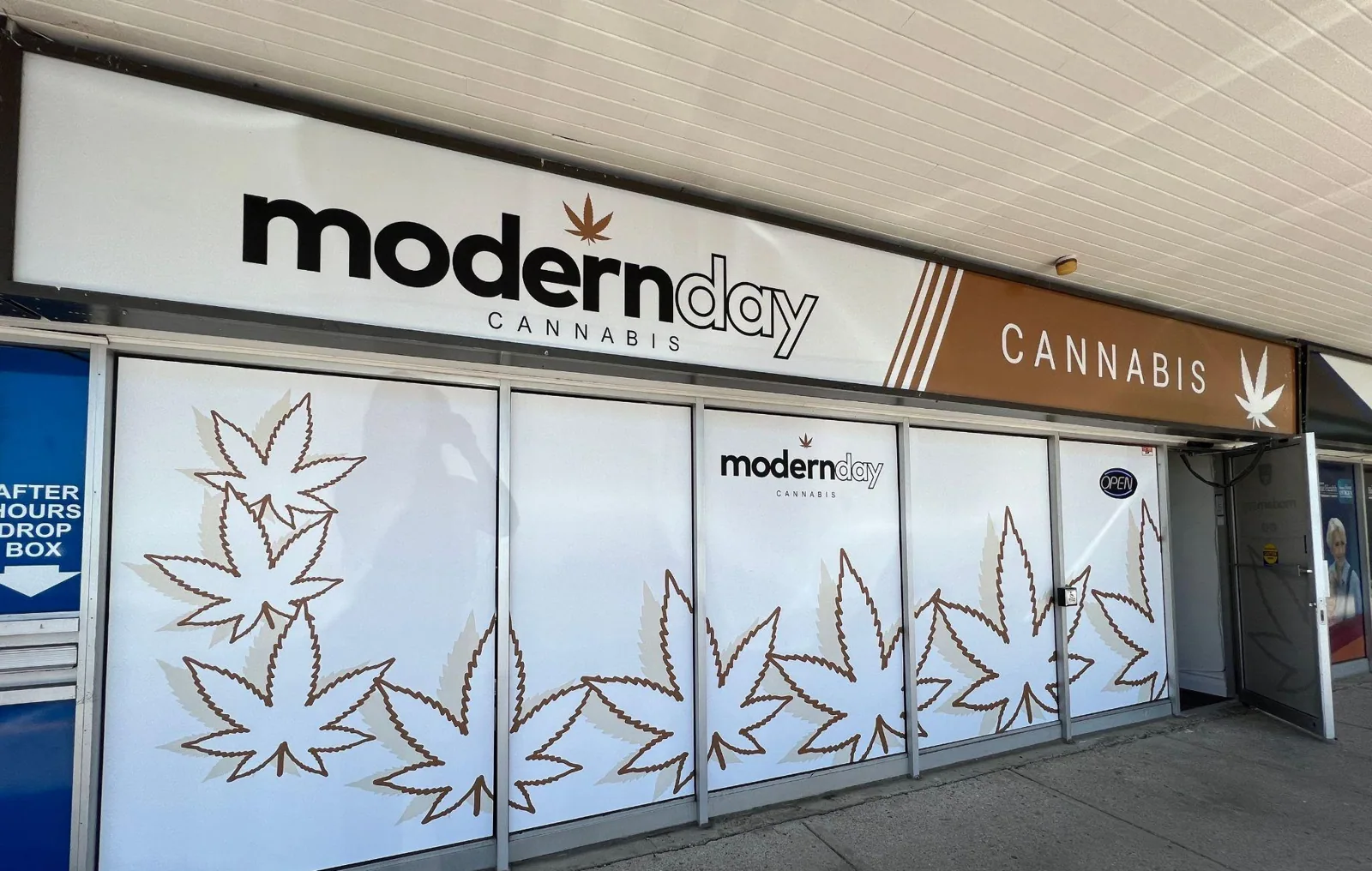
Modern Day Cannabis runs licensed cannabis stores and helps other owners open theirs. Our head office is in North York, Ontario. You can open under our name through the franchise, or use our team for the application, the site, the build-out, compliance and training on a store you own outright. We do not promise that any regulator will approve a licence.
Send the short form on this page with the province and the city you have in mind. We will tell you whether a private store is possible there and what to do first.
General information as of November 2026, not legal or financial advice. Cannabis rules differ by state and province and change often.