To open a cannabis store in BC you apply to the province's Liquor and Cannabis Regulation Branch for a Cannabis Retail Store licence, and your local government or Indigenous Nation must recommend that the licence be issued. That local recommendation decides more applications than anything else in British Columbia, so it comes first in your planning. This guide follows what the BC government publishes. It is general information as of November 2026. It is not legal or financial advice. Confirm current requirements with the Liquor and Cannabis Regulation Branch before you commit money.
How cannabis retail works in British Columbia
British Columbia runs a mixed model. According to Health Canada, adults there can buy from government-operated stores, in person and online, or from private licensed in-person stores. As a private owner you will trade alongside the government's own shops.
Three bodies matter to you:
- The Liquor and Cannabis Regulation Branch (LCRB). It licenses private stores, screens applicants, inspects stores and receives your monthly reports.
- The Liquor Distribution Branch. According to the province, all the cannabis sold in your store must be purchased from it.
- Your local government or Indigenous Nation. It decides whether to recommend your store.
Who can apply
The province lists these conditions for an applicant.
- You must be at least 19 years old.
- You must be a standalone business. The province's examples include a private or public corporation, a sole proprietorship, a partnership, a society or non-profit corporation, an Indigenous Nation, and an extra-provincial company registered in BC.
- You must not be a federally licensed producer of cannabis.
- You do not have to be a citizen or resident of BC or Canada.
You need a separate licence for each store. The province states that a licensee can only hold or have a valid interest in a maximum of eight cannabis retail store licences.
The local recommendation comes first
The province is direct on this point. To approve and issue a cannabis store licence, the LCRB's general manager must have a positive recommendation from the local government with jurisdiction over the proposed location, or from the Indigenous Nation if the site is on reserve land, Nisga'a land or treaty land.
Here is how the province describes the process.
- You apply to the LCRB. After its initial review, the LCRB notifies the local government or Indigenous Nation.
- The local authority either accepts the application for consideration or does not. If it does not accept it, the LCRB closes the application and, according to the province, refunds the application fee.
- If it accepts, it reviews the location and prepares written comments and a recommendation. Where issuing a licence may affect nearby residents, it must gather their views, for example through written comments on a public notice, a public hearing or a referendum.
- It recommends that the licence be issued or not issued. If it recommends against, the general manager cannot issue the licence, and the province says the application fee may not be refunded.
The province also says there is no deadline for a local government or Indigenous Nation to provide its comments. That is the main timing risk in BC. You may be holding a site while a council works through its process.
Local authorities can do more than say yes or no. According to the province they can restrict where stores are located, require a business licence, limit store hours, set conditions such as signage rules, and charge fees for assessing the application. Our guide to why a city can say no covers how to approach that conversation.
Choosing and securing the location
The province sets these location rules.
- A cannabis store must be a permanent building or structure and cannot co-locate with another business. The province has separate guidance for stores in shopping malls and stores that share a vestibule.
- You cannot change the address of the proposed store after you submit the application. Choose once.
- Your application must show that you own the property, lease it, have an agreement to buy or lease it, or have another arrangement such as a sublease.
- If you have an agreement to buy or lease, the purchase or lease must be completed before a licence can be issued.
- Leases or other arrangements must be in place for at least 12 months from the time you receive your licence.
The option to apply on an agreement to lease is useful. It lets you test the local recommendation before you take on full rent. Write the agreement so that it falls away if the recommendation is negative. Local governments may also set distances from other cannabis stores and from places where young people gather, such as schools, playgrounds and recreation centres. Our real estate sourcing team checks those rules before a landlord conversation starts.
What goes into the application
Applications are submitted through the province's online licensing portal with a Business BCeID. According to the province, the application requires:
- Your Canada Revenue Agency business number.
- The store name, the location and the Parcel Identifier of the property.
- Information about the applicant and associates, including directors, shareholders both direct and indirect, and partners.
- Other licences that you or your associates hold or are applying for.
- Consent for security screening and financial integrity checks, which the LCRB calls the fit and proper assessment.
- A declaration of financial, business or family connections to federally licensed producers and to other retail licence holders or applicants.
- A floor plan, a site plan, photos of the store exterior, proposed signage and storage details.
The province lists an application fee, a first-year licensing fee and an annual renewal fee, and says the application fee is generally non-refundable. Read the current amounts on the province's page. It also notes that complete applications are assigned more quickly. Our licence application service builds the package so it goes in complete.
Approval in principle, build-out and inspection
According to the province, approval in principle is granted if you meet the requirements, your application is supported by the local government or Indigenous Nation, and you have paid the licence fee. It means you are eligible for a licence if you pass a final inspection. This is the point at which the province says you may finalise the purchase or lease and renovate so the store matches the plans you filed.
The province's physical security requirements are:
- An audible intruder alarm system and an audible fire alarm.
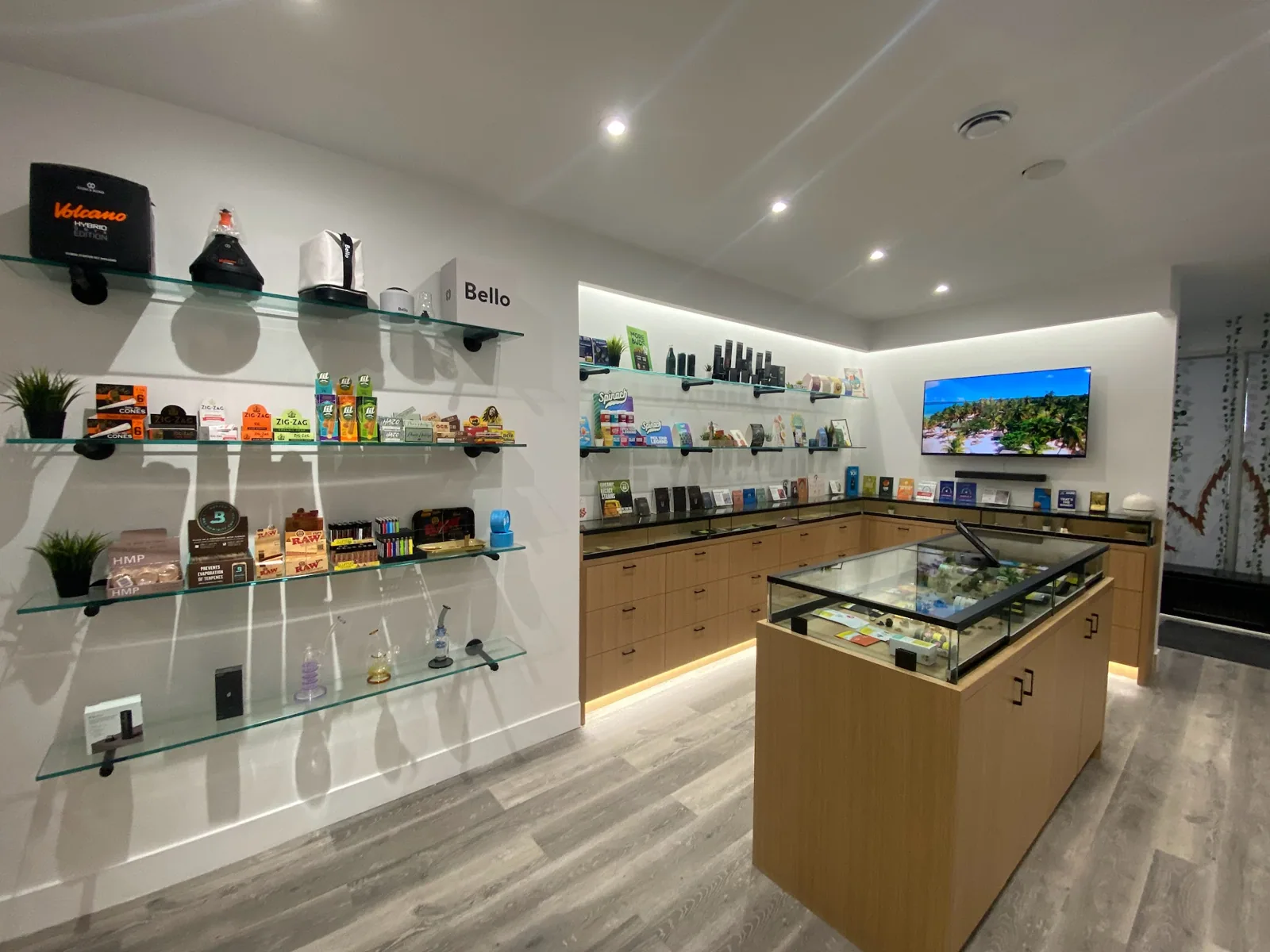
- Locked retail product display cases.
- A locked cannabis storage room.
- Secure perimeter door locks.
- Security cameras with a full unobstructed view of the retail sales area, any product storage area, and the interior and exterior of all entrances and exits.
The province notes that stores are no longer required to be enclosed by non-transparent walls. Cannabis products, accessories, packages and labels still must not be visible from outside the store. Design the front of the store around that.
When you are ready, you contact the LCRB to schedule the inspection. There cannot be any cannabis in the store during it. See build-out consulting for help getting the plans and the finished store to agree.
Training, product and reporting
- Training. The province says the licensee must hold Selling It Right certification, and workers who sell or supervise the sale of cannabis must complete the course too.
- Product. You register with the Liquor Distribution Branch to order. You must be issued a licence before you can order cannabis, so opening stock arrives after the licence, not before.
- Producer relationships. Licensees and staff must not arrange to sell one federally licensed producer's cannabis to the exclusion of another, and must not accept money, gifts or rewards for promoting a brand, such as preferential shelf space.
- Reporting. Stores submit monthly reports to the LCRB, which passes them to Health Canada for the federal Cannabis Tracking System.
Buying an existing BC store
Because a new store depends on a local recommendation, buying a store that already has one is the faster route in many BC communities. The province publishes a transfer process.
- A licence can be transferred to a new licensee if the transfer does not leave that licensee holding or having an interest in more than eight licences.
- The current licensee starts the transfer in the licensing portal. The buyer then completes the application.
- The LCRB must find the proposed licensee fit and proper, which includes security screening and financial integrity checks. The province says approval may be quicker if the buyer already holds a licence.
- The store can stay open during the transfer. The buyer cannot operate the licence until the transfer is complete.
- Cannabis inventory can be sold to the buyer as part of the transfer.
Make the purchase conditional on LCRB approval. Our guide on how to buy an existing cannabis store sets out the checks to run on the lease, the records and the licence history.
Common questions
Do I need to live in BC to open a cannabis store there?
No. The province states that an applicant does not have to be a citizen or resident of BC or Canada. A company from outside the province must be registered in BC as an extra-provincial company.
How many cannabis stores can one owner have in BC?
The province says a licensee can hold or have a valid interest in a maximum of eight Cannabis Retail Store licences. Each store needs its own licence and its own local recommendation.
Can a city block a cannabis store in BC?
Yes. The LCRB cannot issue a licence without a positive recommendation from the local government or Indigenous Nation. A local authority can also decline to consider an application at all.
Can a licensed producer own a cannabis store in BC?
An applicant for a Cannabis Retail Store licence must not be a federally licensed producer. The province has a separate Producer Retail Store licence. Ask the LCRB which applies to you and declare any connection to a producer.
Where do BC cannabis stores get their product?
From the Liquor Distribution Branch. The province says all cannabis sold in a private store must be purchased from it, and you need your licence number to place an order.
Where Modern Day Cannabis fits
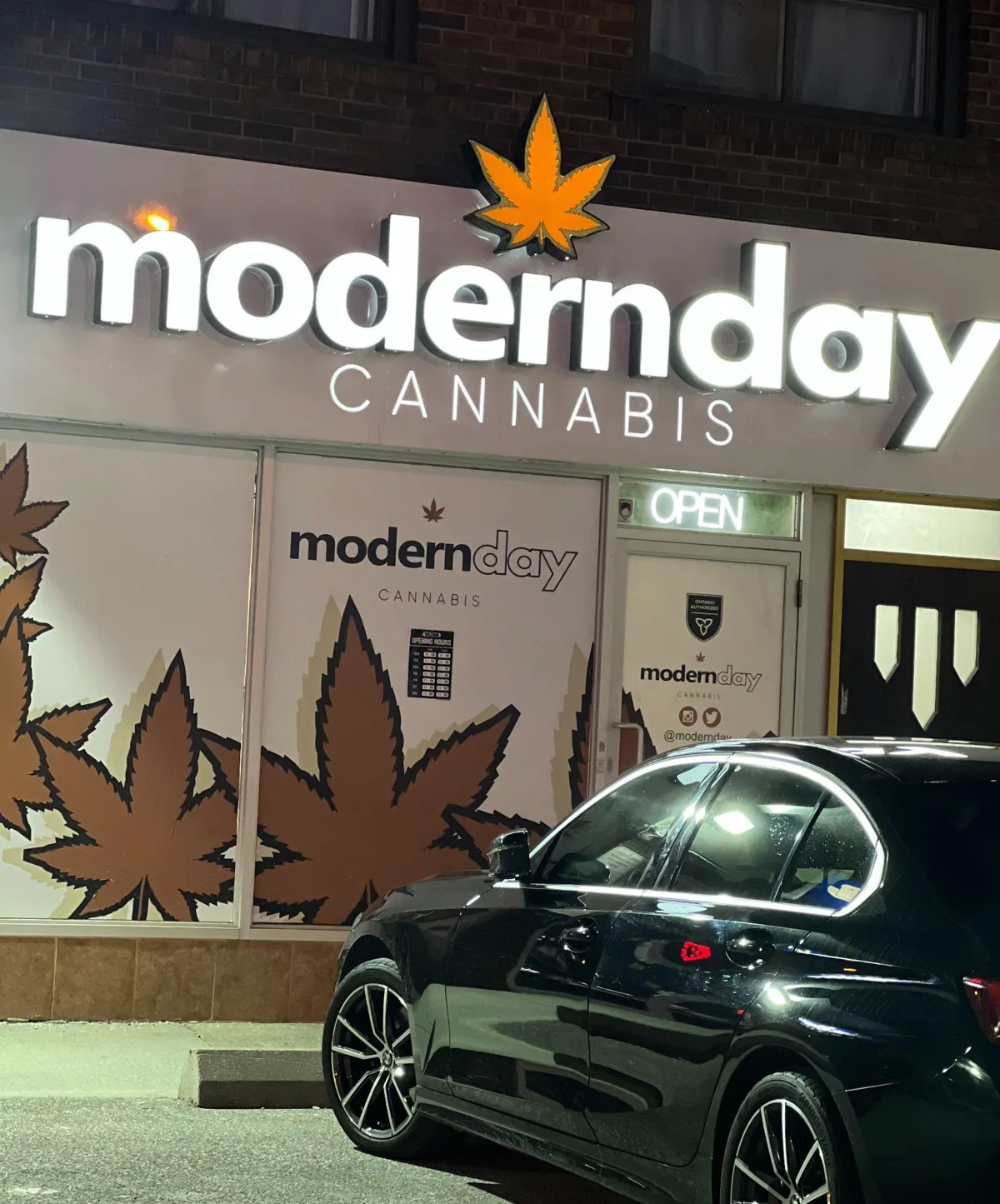
Modern Day Cannabis runs licensed cannabis stores and helps other owners open theirs. In British Columbia we can help you read a municipality's cannabis policy, test a site, prepare the LCRB package, plan the build and train the team, either on your own store or under our franchise. We do not promise a local recommendation or a licence. Those decisions belong to the local authority and the LCRB.
Send the short form on this page with the BC community you have in mind, and say whether you want to open new or buy. We will tell you where to start.
General information as of November 2026, not legal or financial advice. Cannabis rules differ by state and province and change often.